
Best GPS Fleet Tracking Software for Businesses in 2026
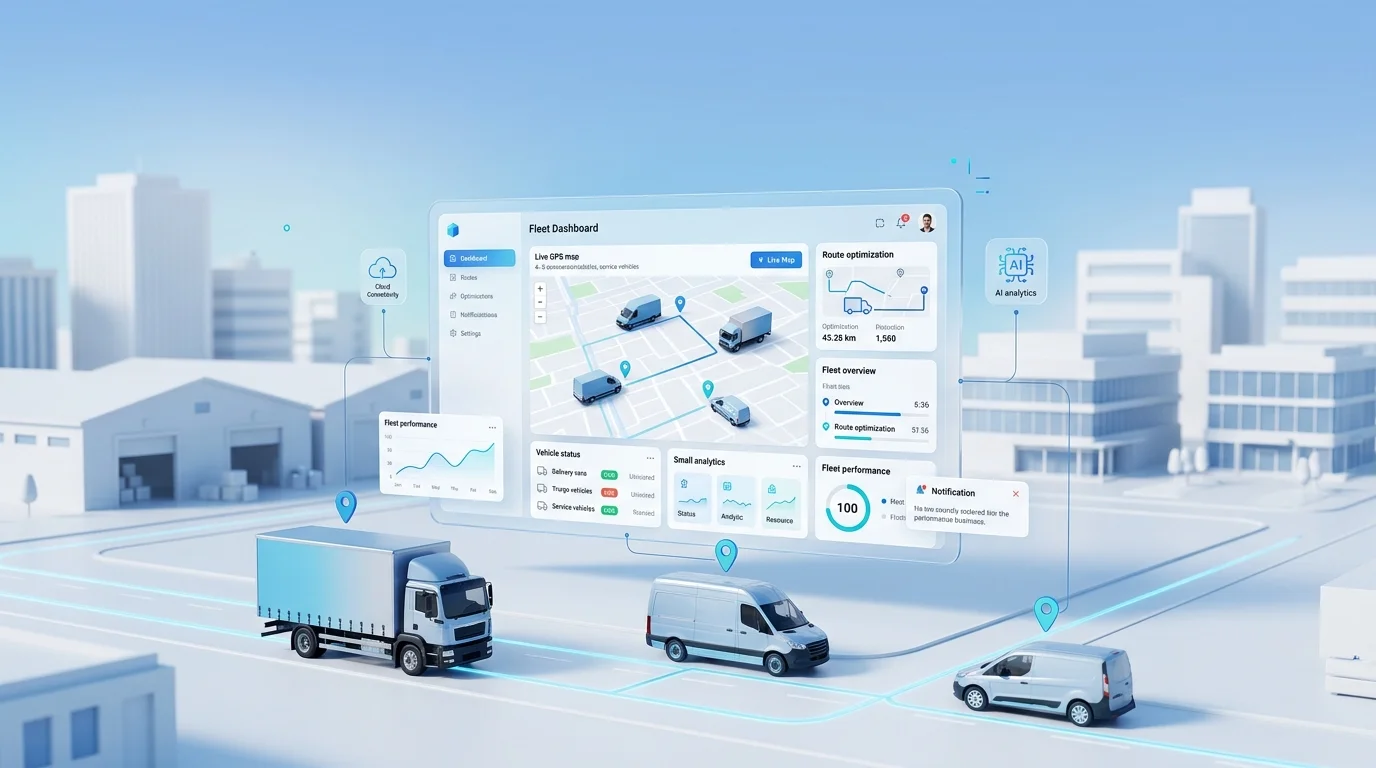
There is no one GPS fleet tracking software that’s best for all businesses; instead, it depends on how you work, what you’re looking to track, and how you like to pay. The key platforms offer all of these capabilities: live tracking, geofencing, maintenance and reporting; they vary in terms of deployment (cloud vs self-hosted), pricing (per-vehicle subscription vs one-time license) and data ownership. This guide has been written to give you information about what to look for, how much you can expect to get back, and how to shortlist (but not rank), as opposed to ranking vendors. If you’re looking for a vendor-by-vendor comparison, check out our list of the best GPS fleet tracking systems.
Key Takeaways
- It’s not a case of “best software” as the answer is dependent on your operation, metrics and budget model.
- While the features are fairly similar to both serious platforms, deployment, pricing and data ownership are the real differentiators.
- Fleet tracking software normally returns benefits in the form of fuel savings, maintenance savings, and administration time savings.
- The software is typically a monthly subscription for cloud-based software, while self-hosted software is typically a one-time license that you own.
- Consider cost of ownership and fit of judge software, not the number of features.
The following is a guide for the buyer on how to choose software. To see the comparison of vendors, check out best GPS fleet tracking systems; to see the technology, check out how GPS tracking works.
What Does GPS Fleet Tracking Software Do?
GPS fleet tracking software converts the location and vehicle data from telematics devices into something a business can do. The bare minimum includes live vehicle tracking, trip history, geofencing and alerts, driver behaviour monitoring, preventative maintenance scheduling, mobile app, and fuel and cost reporting.
The bottom line is that these are the features that most people take for granted these days when they compare products. Most well-known sites do them effectively. Although feature checklists seem like the way to go to pick, they don’t separate contenders. The only thing that makes a difference, and what will make you happy in three years, is who uses the software, how you pay for it, and who owns the data. That’s the basis on which this guide is focused.
The Criteria That Actually Matter
The basics of fleet tracking software are the same on most platforms, but it’s the deployment model, pricing and data ownership that makes the differences.
- Deployment model. Cloud (rented by vendor) or self-hosted (on your own server). This single decision will affect cost, data control and customization.
- Pricing structure. Subscription per vehicle per month or one-time vehicle license. As the number of vehicles increases, so does the difference.
- Data ownership. Is your vehicle and driver data stored on your servers or the vendor’s servers? This is important for privacy, compliance and leverage.
- Scalability. Will the cost and performance scale down from 20 vehicles to 2,000 vehicles, or will the cost and performance per vehicle increase?
- Integration. Can it connect to your existing systems, a TMS, ERP, fuel cards, or accounting, via API?
- Device compatibility. Is it bound to the vendor’s hardware or is it device agnostic, spanning GPS protocols?
- Support and onboarding. Self-service or all-in-one team to install, configure and train?
Notice that only one of them (device compatibility) is a “feature. The others are business and commercial issues and those should be addressed by operations and finance – not just a features spreadsheet.
How We Assessed Software Fit
Instead of comparing products, we had a look at the considerations businesses take when the product is used in a comparable way and the core features are aligned: deployment model, pricing model, data ownership, scalability, integration options, device compatibility, and support model. Product information and customer comments were sourced from public data. Features and pricing will vary, so always check them with the various vendors, and compare the assessment with your operation, not a top-ten list.
What’s the ROI of Fleet Tracking Software?
For most businesses, fleet tracking software pays for itself, but it helps to know where the return actually comes from:
- Fuel savings. Typically, 10-15% of fuel savings are realized through reduced idling, route efficiency, and the prevention of unauthorized use. The cost of fuel is one of the biggest controllable costs for a fleet, and fuel usage has a disproportionate effect on logistics costs, as demonstrated by industry bodies.
- Lower maintenance costs. Scheduled engine hour or mileage maintenance is less expensive than breakdowns and emergency repairs.
- Reduced admin time. Hours of manual work are eliminated each week with automated reports, timesheets and compliance logs.
- Less unauthorized use. After-hours alerts and geofencing drastically cut personal use and moonlighting.
- Better utilization. Access to idle / under-utilized vehicles allows you to right size the vehicle fleet.
- Lower insurance and risk. Data collected by driver behavior and dashcams will lower premiums and avoid false claims.
The most obvious sign of ROI is the 3-year total cost of ownership (TCO) of software, hardware, and admin vs these savings. The software expense typically is significantly less than the fuel and maintenance expenses it helps reduce, which makes it an affordable solution for any fleet, regardless of size. To learn more about how fleet maintenance software saves money in particular, read how fleet maintenance software reduces costs.
What Does Fleet Tracking Software Cost?
Fleet tracking software comes in two pricing models, and the bottom line is more significant than the actual figure:
- Per-vehicle subscription (cloud). Typically $15 to $45 per car every month. Easy to set up, but this will rise with each vehicle and continue to go up year after year, a 100 vehicle fleet at $30/month is $36,000 per year, year after year..
- One-time license (self-hosted). One time payment to have software, after that hosting. The cost per vehicle reduces to a minimal level with increased scale.
There’s generally add-ons, too, such as hardware, premium support, dashing cameras, etc., so do not forget to compare the big picture. one-time license vs subscription GPS tracking compares the factors and determines the crossover point, which varies by fleet size and time period, that is, when it is better to subscribe and when it is better to license.
Cloud vs Self-Hosted: The Business Decision
This is the one that beats all feature comparisons; it’s worth serious consideration.
Cloud software is in the cloud and is managed by the vendor. Easy to deploy, no server management, and it is a service for businesses that prefer a turnkey solution. The compromises are the ongoing expense for every vehicle in your fleet in addition to your data residing on the vendor’s systems with their conditions.
Self-hosted Software is able to be run from your own server. You own the software (typically one-time licensing), your data remains in-house and the platform can even be branded and tweaked. The price is that it needs to be managed, but we’ve got managed self-hosting.
Here’s the decision at a glance:
| Factor | Cloud Software | Self-Hosted Software |
| Pricing | Per-vehicle monthly subscription | One-time license + hosting |
| Cost as you scale | Rises with every vehicle | Effectively flattens |
| Data location | Vendor’s servers | Your own infrastructure |
| Setup effort | Minimal, turnkey | Higher (managed hosting reduces it) |
| Customization | Limited | Extensive, incl. white-label |
| Best for | Small fleets wanting simplicity | Fleets wanting ownership & scale |
AIQ Connect is in the self-hosted category: It requires a one-time license without per vehicle charges, and includes live tracking, geofencing, 60+ reports and full data ownership. For businesses with dozens of vehicles—or data-privacy requirements—the model is typically the better value and more controllable, although an enterprise with a small business size that doesn’t want to deal with setup may want to consider a hosted cloud platform. see self-hosted vs cloud GPS tracking and what is self-hosted GPS tracking software.
Your Software Selection Checklist
Before committing, confirm each of these against your own operation:
- Which deployment model are we looking for: Cloud convenience, or self-owned?
- What is the 3 year total cost of ownership in each pricing model?
- What is going to be the storage location for our vehicle and driver information, and do we retain full control of it?
- Does it grow with the changes in our target fleet size without it becoming the pain?
- Will it work with our current TMS, ERP or accounting system?
- Does it work with all devices, or is it bound to devices?
- Who installs, configures and trains, and what is the cost of support?
- What will happen to our data and access if we go?
The vendor who can answer the second to last two questions comfortably is most likely the vendor to consider.
Where AIQ Connect Fits
For most businesses, that’s the right type of fleet tracking service, as the majority of fleet tracking software is cloud-based and charges users based on the number of vehicles they track. AIQ Connect was founded for the businesses it isn’t for: those who prefer to own their software and data, instead of renting them. A one-time license platform that is self-hosted, device agnostic and provides GPS tracking, fleet management and white-labelled branding of the infrastructure that you control. Predictable cost, data ownership and scaling without per vehicle fees are very important and it’s worth considering countering the cloud giants, while turnkey simplicity is very important and a hosted platform might be the best fit.
For more detail, compare vendors in best GPS fleet tracking systems, or read the benefits of self-hosted GPS tracking software.
Conclusion
Your ideal GPS fleet tracking software for your organization is the one that suits your operation, expands with you and suits your data payment and ownership approaches, not necessarily the one that has the most features. If you’re looking for serious platforms, take into account the deployment model, pricing, data ownership, and total cost of ownership. Choose 2-3 and test your true fleet and then verify the business conditions before committing to signing.
Frequently Asked Questions
What is the best GPS fleet tracking software for businesses?
It’s not a one-size-fits-all aspect; it relies on the measurements required, your business model, and the budget you have. The choice is typically between one-time and subscription licenses, between cloud and self-hosted deployment and between data ownership, as the core features are the same on most serious platforms.
How much does GPS fleet tracking software cost?
The monthly expense for the cloud software is usually $15–$45 per vehicle, depending on the size of the fleet. The per-vehicle price tends to be lower with self-hosted software, and it’s typically a one-time license along with hosting. Always consider 3-year total cost of ownership, including hardware and support.
What is the ROI of fleet tracking software?
The primary returns are from fuel savings (typically 10–15%), minimized maintenance expenses via preventive scheduling, less admin time, fewer vehicles used without permission, and maximized utilization of the fleet. For the majority of businesses, the software expense is a small proportion of what it can assist managing in regard to fuel and upkeep.
Should a business choose cloud or self-hosted fleet tracking software?
Cloud suits businesses that want to deploy a solution without having to deal with the server. Cloud suits businesses looking for a solution that’s deployed with a recurring per-vehicle cost. Self-hosted suits companies that wish to have their software, their data, and do not wish to pay per-vehicle fees, but at the cost of managing a server (which is what managed hosting does).
How do I choose fleet tracking software for my business?
Begin with a deployment model and pricing structure, not features as the core features are comparable. Verify data ownership, scalability, integration, device compatibility, and support. Do a 3 year total cost of ownership comparison and compare shortlisted options with actual fleet.
Is GPS fleet tracking software worth it for small businesses?
Usually yes. Fuel savings, reduced administration and maintenance costs are all benefits that can be seen in any size fleet, even small ones. A per-vehicle subscription must be a major consideration for small businesses as they consider pricing model: it can add up quickly as the number of vehicles increases, compared to a one-time license fee.


