
Complete Guide to Open Source GPS Tracking Software
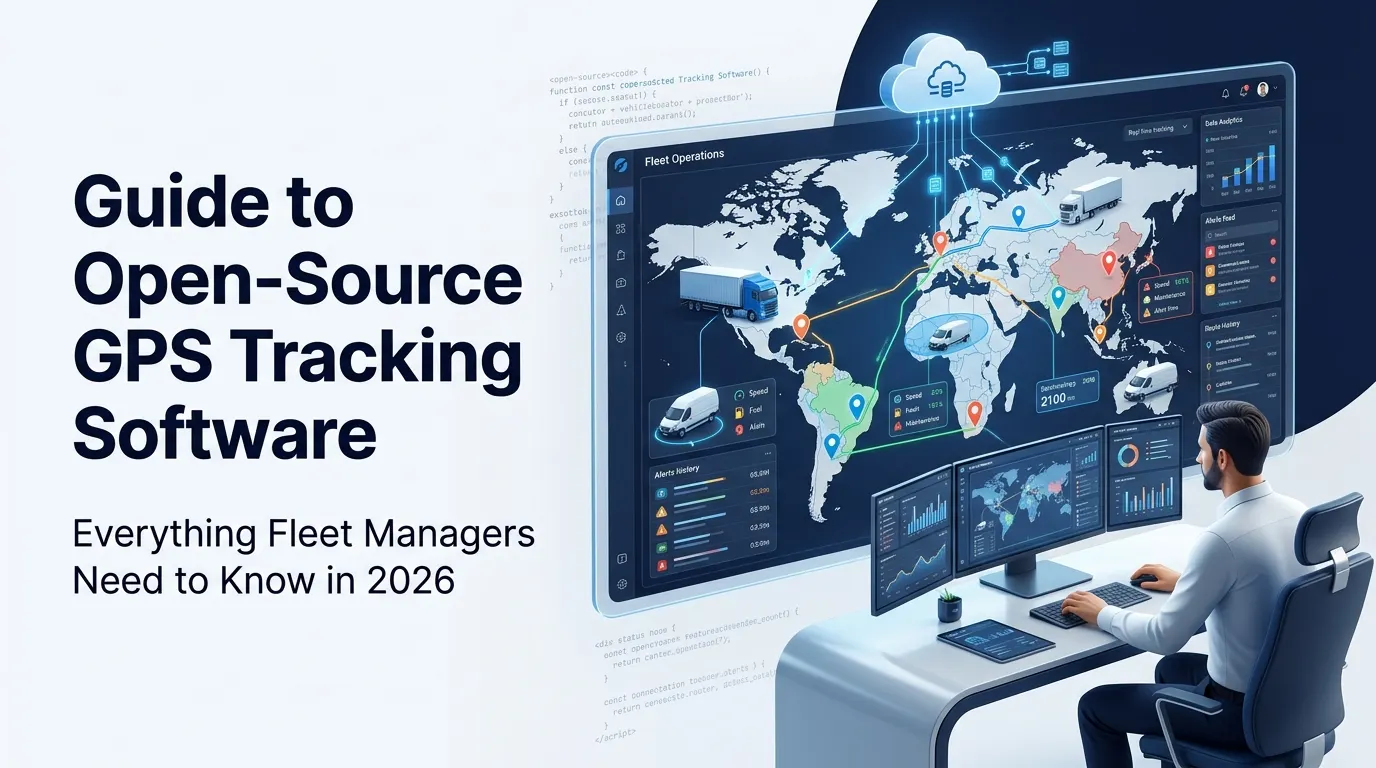
Small fleet businesses often face a number of operational issues, such as rising operating costs, broken systems, poor visibility and a need to do more with less. Spreadsheets, phone calls, and manual processes are soon cumbersome and hard to manage when the number of vehicles grows.
Open source GPS tracking software is gaining popularity in the fleet sector due to its flexibility, significant control over operational information, and reduced long-term expenses compared to subscription-driven tracking solutions.
Meanwhile, businesses are growing more interested in self hosted GPS tracking software, seeking greater control over their infrastructure, data control, and workflow customization.
This guide will explain open source GPS tracking, the functionalities that small fleets need to look for and the increased attractiveness of self-hosted deployment.
What Is Open Source GPS Tracking Software?
Open source GPS tracking software is a GPS fleet tracking software that a company can install, setup and implement within their operations. Open-source platforms offer access to a software environment that can be customized and maintained internally, as opposed to fully managed software where infrastructure, upgrades and workflows are under the vendor’s control.
Open source systems offer businesses much more flexibility in the deployment, integration and scalability of a tracking environment over time, as opposed to closed platforms, which limit the infrastructure options and customization possibilities.
Flexibility remains one of the biggest advantages. Operators can tailor workflows to fit the way they operate, rather than adapting business processes to the software. This is particularly beneficial for fleets with specific routing needs, complex business processes, or workflows that are changing over time.
There is also an increased degree of flexibility in integration with open source platforms. Tracking systems can be integrated with other systems being used by businesses, such as maintenance systems, billing workflows, dispatch software, fuel management systems or reporting platforms without them leaving businesses tied up in an ecosystem.
Key Features Every Open Source GPS Tracking Software Should Include
When choosing an application for a small fleet, smaller functionality lists are better than big ones. The best open source GPS tracking software should make things visible, decrease manual tasks and offer support to daily fleet operations without overcomplicating things.
Real-Time GPS Tracking
The core of any successful open source GPS tracking software is real-time vehicle tracking, which offers full visibility of fleet movement, vehicle utilization and operational performance. In small fleets, live tracking can help in better decision making, minimizing delays, and improving customer communication as it provides accurate location information to the dispatchers.
Geofencing and Alerts
One of the most beneficial features of open source GPS tracking software is geofencing, which turns vehicle data into automated workflows. When fleet operators place virtual boundaries around significant locations, it enables them to automate monitoring processes and minimize manual tracking.
Reporting and Analytics
Reporting and analytics provide valuable insights from raw fleet data that can help optimize operations. If businesses are not able to use GPS tracking data to take quantifiable decisions, the best open source GPS tracking software will only result in being of marginal value.
Reporting features are useful for small fleets, as they can help detect inefficiencies, track trends and enhance cost management of vehicles, drivers and operations.
Route Optimization and Route History
A GPS tracking program can help fleet managers grasp the movement of vehicles in routes, service areas, and beyond. Having a route history will enable businesses to see completed routes, understand route efficiency, and look for any unnecessary detours or delays. Route optimization helps to optimize delivery schedules, save fuel, and optimize dispatch teams’ resource allocation over time.
Idle Time Monitoring
Fuel expenses, unnecessary engine wear and decreased operational performance are caused by excessive idling. GPS tracking software offers insights into how much time is being spent idle and can identify the sources of unnecessary idle time. Idle monitoring enables businesses to save fuel and boost vehicle productivity.
Speed Monitoring and Overspeed Alerts
Businesses can use speed monitoring to enhance road safety and minimize dangerous driving. The GPS tracking software will detect speeding, send alerts, and provide a report of repeat offenses. Speed monitoring helps ensure safer driving practices and minimize accident liability.
Route Deviation Detection
Route deviation monitoring detects vehicles off their assigned routes or off approved routes. This can help ensure route compliance, provide better visibility of customer service, and help to quickly identify unusual movement patterns that may lead to theft.
Why Small Fleets Are Choosing Self Hosted GPS Tracking Software
As a small fleet size grows, adds more users, and reporting needs become more complex, costs associated with software grow. Initially a low price can end up being a high cost due to incrementing subscription fees with fleet expansion.
That’s one of the reasons some companies are looking at GPS tracking software for self hosting as an alternative option. Self-hosted environments give fleet operators more control over infrastructure, work-flows and, most importantly, ownership of fleet data.
There is a considerable amount of operational data generated daily from fleet operations, such as vehicle location information, customer location information, driver behavior, delivery activity, and operational reports. This data becomes more significant as fleets grow, for decision-making, performance management and business planning.
With the software hosted in their own infrastructure, businesses can enjoy greater control over the location of data storage, access and management. As opposed to 100% dependence on third-party environments, fleet operators can ensure that sensitive business information stays in their own hands and can gain greater insight of what’s happening with data internally.
GPS tracking systems are no longer just a tracking tool—they are gaining importance for growing fleets. They are evolving as key operational tools, facilitating dispatching, customer service, driver management and business reporting.
Advantages of Self Hosted GPS Tracking Software for Small Businesses
As fleets expand and business needs evolve, small businesses may not be satisfied with simple vehicle tracking. Managed software platforms can accelerate fleet setup, but some expanding fleets prefer to go with a self-hosted deployment to have more control, flexibility, and ownership over their operational systems.
Some of the major benefits of using GPS tracking software that is self-hosted for small businesses are listed below:
Lower Long-Term Costs
The owners of a fleet are normally the customers of a subscription platform, and their charges are typically based on the number of vehicles, number of users and requirements for data storage.
Self-hosting is the change of cost to infrastructure ownership versus the recurring cost of licensing.
Custom Workflow Flexibility
Self hosted platforms can also include some extra features such as the custom workflows, API integrations, custom reports and ERP Connectivity that can be made available to fleet.
Starting from the operational cost, flexibility grows more and more critical for fleet managers.
Data Privacy and Data Ownership
When selecting GPS tracking software, data privacy has grown to become more of a factor. There are a lot of sensitive data points being captured in fleet operations like the location of vehicles, customer routes, driver’s activity, trips history, customer performance etc.
Platforms that enable client-controlled deployments typically give more control over where data is stored and how it is accessed. Businesses can operate more information and processes with their own control rather than the third party’s.
Better data control benefits fleet managers by:
- Better access management
- Improved data ownership
- Less reliance on third-party providers.Minimized reliance on third party providers.
- To provide increased visibility of security practices.
- Better compliance with internal policies
Data, in all industries, is becoming one of the most valuable assets of the business. With the growingConnectedness of fleet operations, organisations are increasingly emphasising the need to safeguard operational data, control access to it and provide long-term visibility of key fleet information.
Reduced Vendor Dependency
Completely cloud-based businesses may have issues if a third party changes the price or cuts features, or if they have to change their operations.
Self-hosted environments offer more control over decisions and future direction of platforms.
Conclusion
For small fleets, open source GPS tracking software is becoming the more appealing option due to its flexibility, control of operational systems and ownership of business-critical data. With the expansion of vehicle fleets, fleet visibility and operational control are becoming more critical as managing fleets with spreadsheets, disconnected tools, and manual processes become more challenging.
Self hosted solutions can give businesses the chance to tailor operational processes to their business needs, not the limitations of software. Self-hosted deployments are an appealing option for many fleet operators because they give them more control over infrastructure, increased data ownership, customization flexibility, and reduced long-term costs.
But, the more significant part is that today’s GPS tracking systems aren’t just for vehicle location tracking. They are beginning to enable route optimization, driver monitoring, reporting, alerts, dispatch workflows and business operation decision making throughout the business.
Many fleets also start exploring platforms that go beyond vehicle tracking and automatically handle their workflows as operational needs evolve. As requirements change, businesses might consider solutions like AIQ Connect for increased deployment flexibility and control over fleet operations.
Frequently Asked Questions
What is open source GPS tracking software?
Open source GPS tracking software are the GPS tracking software that can be used by companies to deploy, customise and manage to their requirements. These platforms usually offer the ability to track vehicles, monitor routes, send alerts, report on performance, and analyze data, and they’re more flexible than closed platforms.
Why should small fleets choose self hosted GPS tracking software?
Self hosted GPS tracking software is an option that many small fleets prefer, as they can have more control over the infrastructure, data and future software expenses. Deployments on your own servers will also provide flexibility for custom workflows, integrations, and expanding operational needs.
Is open source GPS tracking software cheaper than subscription-based platforms?
While open source software can save on recurring software subscription costs, there are other factors to consider when estimating total ownership costs for business, such as infrastructure, hosting, maintenance, support, GPS hardware, and set-up.
What features should small fleets prioritize in GPS tracking software?
For small fleets, it’s essential to prioritize operational capabilities that enhance day-to-day fleet visibility and efficiency, such as real-time vehicle tracking, geofencing, route history, reporting, alerts, route optimization, idle monitoring, and fleet analytics.
Is self hosted GPS tracking software secure for fleet operations?
Deployment practices, infrastructure management, access controls and operational processes contribute to security. More control over the internal management of fleet data and where it is stored is a major consideration for many businesses in choosing self-hosted environments.
Can GPS tracking software improve fleet efficiency?
Yes. The GPS tracking software can enhance the planning of the routes, minimize non-essential driving, keep an eye on driver activity, optimize dispatch decisions, strengthen utilization of vehicles and give better visibility of the activities of the fleet.


