
What Is White-Label GPS Tracking Software? A Complete Guide
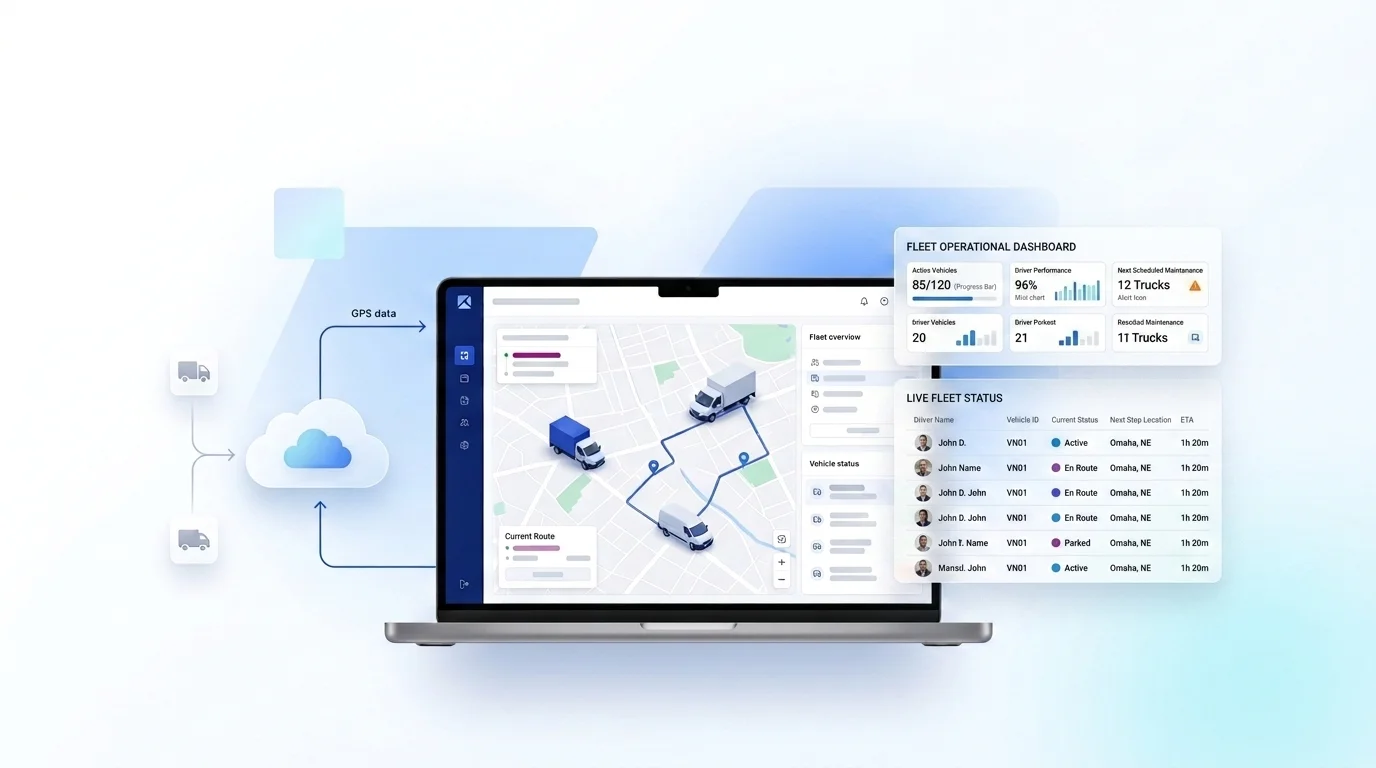
GPS tracking software that is white labeled is a tracking platform that is already made and can be branded as your own and sold. Your customers know your logo, your domain and your app, the engine, live location, geofencing, reports, device support, is built by the original provider and maintained. In reality, it allows a business to start a branded tracking service in as short of a time as a few weeks as opposed to spending $250,000 – $1M+ and about one or two years building one from the ground up.
Key Takeaways
- White label GPS tracking software is a ready-to-use software platform that you can rebrand with your logo, domain, apps, and sell it.
- It’s designed for resellers, startups, telecoms and integrators who want to provide tracking without having to develop the software.
- The best model in 2026 is white label with ownership: A self-hosted platform where you own the server and the data and don’t pay per vehicle charges.
In this guide, you’ll learn how white-label tracking works, what it includes, why it’s better than self-hosting, and how to select a platform. If you are interested in the full case for ownership of your GPS tracking software, you should begin by reading our pillar on the benefits of self-hosted GPS tracking software.
What Is White-Label GPS Tracking Software?
White label GPS tracking software is GPS tracking software developed by one company and rebranded by another company for resale. Instead of developing a system from scratch, you deploy a pre-existing platform, cover it with your logo, colors, domain and mobile applications. It appears to your customer as if it’s your software!
The “white-label” part simply refers to shipping empty, waiting for your branding. You will come across the same concept being referred to as a white-label telematics platform, a branded fleet tracking solution or a GPS SaaS solution – all of which refer to a vehicle tracking platform that you market under your own brand name. But the same engine typically extends to wider fleet management software and asset tracking software – for vehicles, equipment, and IoT sensors alike.
Key Terms, Defined
- White-label GPS tracking software: software that you buy, modify and brand as your own.
- Self-hosted white-label:White label platform on your own server – data and infrastructure is yours.
- Vendor-branded tracking: a platform (Geotab, Samsara) that is not re-brandable and is used under the vendor’s brand.
- Custom development: requires a team to construct a platform from scratch, a near total degree of control, and a time investment of one to two years at a cost of $250K–$1M+.
How Does It Work?
White-label tracking is a full system, not just a screen. Here’s the path the data takes, from the vehicle to your branded dashboard, in four steps:
- A GPS device A GPS device in a vehicle or asset picks up its position from GPS satellites
- That data travels That information is sent over a cell network, in small packets, to the tracking server.
- The server processes and stores it, It is stored and processed by the server, a solid one can process thousands of vehicles without dropping a beat.
- Application Layer It’s on a dashboard with your logo, and your customer subconsciously adopts it into their daily routine.
What’s most important is that everyday the customer logs into your branded platform, the relationship becomes a bit more sticky.
Real-World Examples of White-Label GPS Tracking
Once you see it in the wild, it’s easier to imagine. Some real-world shapes it can assume:
- A Dubai logistics company erects a brand-new platform for 200 delivery vehicles and it goes live in less than 3 weeks compared to the 12-24 months for a custom build.
- The telecom provider bundles tracking their SIM and makes $8-$15 per device per month in recurring revenue from their one-and-done hardware sale.
- A school bus operator operates 60 buses with their own branded parent app and has a small monthly subscription fee for live ETAs.
- An African mobility startup that sells tracking as its own product without eroding its margins with per-device platform fees, going from zero to 5,000 vehicles.
In all of them, there was a thread: they are all businesses with a brand and customer base. Besides, white-label software simply allows them to provide their users with professional tracking services without having to invest in time or money to create it. If you’re looking for some perspective, a custom build is 12-24 months and runs at $250,000 to over $1 million, while a white-label platform comes up and running in weeks for much less. Furthermore, the market is still expanding: The North American installed fleet-management base of approximately 19 million units is expected to reach more than 33 million by 2029.
Examples of White-Label GPS Tracking Software Providers
The white-label platforms are available in a wide variety, with each platform having a different flavor of reseller market. Let’s take a quick look at where the famous ones fit.
| Provider | Hosting Model | Typical Pricing | Best For | Considerations |
| Navixy | Cloud / on-premise | $499+ setup, then $5–$15/device/mo | Resellers wanting no-code white-label apps | Per-device fees scale with fleet |
| Wialon | Cloud / hosted | From ~€49/mo, lifetime licenses available | Large telematics service providers | Recurring licensing may increase costs |
| GpsGate | Self-hosted / cloud | Per-application licensing | Developers needing API and plugins | Licensing tied to application count |
| GPSWOX | Self-hosted | One-time license or SaaS tiers | Budget-conscious resellers | Feature set varies by plan |
| Traccar | Self-hosted (open-source) | Free software | Technical teams comfortable with DIY | Requires more in-house setup |
| AIQConnect | Self-hosted | One-time license, no per-vehicle fees | Ownership-focused businesses | Self-hosted deployment requires server management |
What’s notable about the pattern: every cloud provider charges you per device, which means that the more you have, the more you’ll spend. Self-hosted, particularly one-time-licensed, options allow you to retain more of the margin when you scale up – and that’s why ownership-minded operators are continuing to move toward them.
What Features Does White-Label GPS Tracking Software Include?
A white-label GPS tracking software usually consists of real-time tracking, geofencing, alerts, reports, APIs, user management, mobile apps and fleet analytics. The features that will become standard for customers:
- Real-time GPS location, trip history, and route replay
- Geofencing with entry/exit alerts
- Driver behavior and speed monitoring
- Fuel and sensor monitoring (temperature, humidity for cold chain)
- Customizable reports (trip, fuel, geofence, maintenance)
- Role-based customer and user management
- Branded web dashboard and native mobile apps
- API integration and multi-language support
White-Label vs. Custom Development vs. Vendor-Branded
If you want to provide tracking there really are three paths that you can follow:
| Approach | Cost | Time to Market | Branding | Best For |
| Build custom from scratch | $250,000–$1M+ | 1–2 years | Total control | Massive scale, unique features |
| White-label platform | License fee | Days to weeks | Full rebrand | Resellers, startups, integrators |
| Vendor-branded (Geotab, Samsara) | Subscription | Fast | None (their brand) | Using tracking, not reselling |
White-label is the best of both worlds for just about everyone who wants to sell tracking under their own brand, because while it doesn’t take as long as a seven-year wait, you aren’t paying seven figures just for the privilege of having a custom build. If you are thinking of doing this as a business, our how to start a GPS tracking business guide has more details.
It is the true fork between white-label platforms the software is housed in and who owns the data. Everything’s on the vendor’s SaaS servers, you’re putting your name on the front end, you’re live in no time at all, but you have little control over your own data and any per device fees charged. White Label: it is hosted yourself in your server or cloud and everything is yours: your brand, your server, your data, your rules.
By 2026, that ownership model is what serious operators will increasingly be looking for, as it is more of a tracking business they own, rather than a reskinning of some other product. The cost side is covered in one-time license vs subscription GPS tracking, and the deployment side in self-hosted vs cloud GPS tracking.
How Do You Choose White-Label GPS Tracking Software?
Marketing pages all sound the same, so judge platforms against a checklist instead:
- Branding depth: Complete removal of any traces of the original provider, logo, domain, logon page, apps .
- Data ownership: complete ownership of your data, and can be downloaded in any format (CSV, JSON, KML)
- Hosting model: Cloud convenience or owning without per device cost
- Device support: This means the device or devices you can use are compatible with a wide range of GPS protocols, which means you won’t be stuck with one hardware vendor.
- Security and contracts: Encryption, GDPR compliance and no punishing lock-in clauses.
- Support and onboarding:A partner who trains your team and is there for you after you’ve launched. Don’t forget to check the track record of the existing resellers and even to lock them down on setup timelines and real-world responsiveness of support.
Why Businesses Choose AIQConnect
Based on our own experience in deploying GPS tracking platforms for companies in various countries, the following five points are top of mind when buyers want to buy a white-label GPS tracking platform: But more often, those factors determine profitability more than the initial license price.
AIQConnect is one of the non-hosted white label solutions, meaning it is self-hosted instead of per-vehicle payment. The factors that drive companies to choose it seem to boil down to a handful of things:
- Self-hosted deployment — it is deployed on your server and the data is yours (GDPR compliant, air-gapped if necessary) and ensuring data privacy
- Unlimited vehicles on one license — No additional charges on per-vehicle basis, so every customer you sign is a margin, not a cost.
- Full white-label branding — your logo, your domain, native apps in 15+ languages.
- Customization – Customization as per needs of your business
That combination pairs the ownership of GPS tracking reseller software with proper commercial support. If it lines up with what you’re after, book a free demo or have a look at the feature set.
Related Reading
- How to Start a GPS Tracking Business
- Self-Hosted vs Cloud GPS Tracking
- One-Time vs Subscription GPS Tracking
- Benefits of Self-Hosted GPS Tracking Software
FAQs About White-Label GPS Tracking Software
What is white-label GPS tracking software?
It’s a pre-made tracking platform; you add your logo, domain, and apps and then sell it as your own product. Original provider constructs and maintains the technology; Brand and Customer relationships are yours.
Which are the best white-label GPS tracking software providers?
Navixy, Wialon, GPSGate, GPSWOX, AIQConnect (open-source) and Traccar are among the well-known ones. Usually, cloud platforms impose per-device fees, whereas self-hosted, one-time-licensed solutions such as AIQConnect allow resellers to keep more of the margin as they grow.
How much does white-label GPS tracking software cost?
The costs of cloud white-label platforms are typically in the $5 – $15 range per device per month, and may include a setup fee of $499. One-time-licensed platforms are also self-hosted and therefore avoid per-device fees, which is much more affordable than a custom-built platform for $250,000–$1M+ a license.
What is the difference between white-label and custom GPS development?
Custom development involves creating your own platform: control, $250K–$1M+ and 1-2 years. The white label vendor delivers a platform that is pre-built and pre-branded to you in days to weeks — and at a much lower cost — while the vendor maintains the underlying technology.
Is white-label GPS tracking software profitable?
Tracking is a business based on recurring revenue, reseller margins are usually in the 50-75% range, and as customers renew and buy more vehicles, you will get more money, particularly under a one-time-license model where new customers do not contribute to your software bill.
How long does white-label GPS tracking deployment take?
A custom build requires 12–24 months, whereas with a ready-made platform it takes just days to a few weeks. Set up and configured for you by managed providers, it’s the faster end.
Can I integrate my own GPS devices and IoT sensors?
Usually, yes. Robust white-label platforms are available that can accommodate various GPS protocols and hardware vendors, as well as IoT and Bluetooth sensors (temperature, humidity, fuel, door status). Only confirm protocol compatibility prior to committing.
Who should use white-label GPS tracking software?
It is ideal for GPS resellers, telecom companies, fleet solution companies, system integrators, IoT companies, and startups looking to create their own branded GPS tracking solution without coding from the ground up.


2 Comments