
Best Fleet Tracking Systems for Delivery Fleets
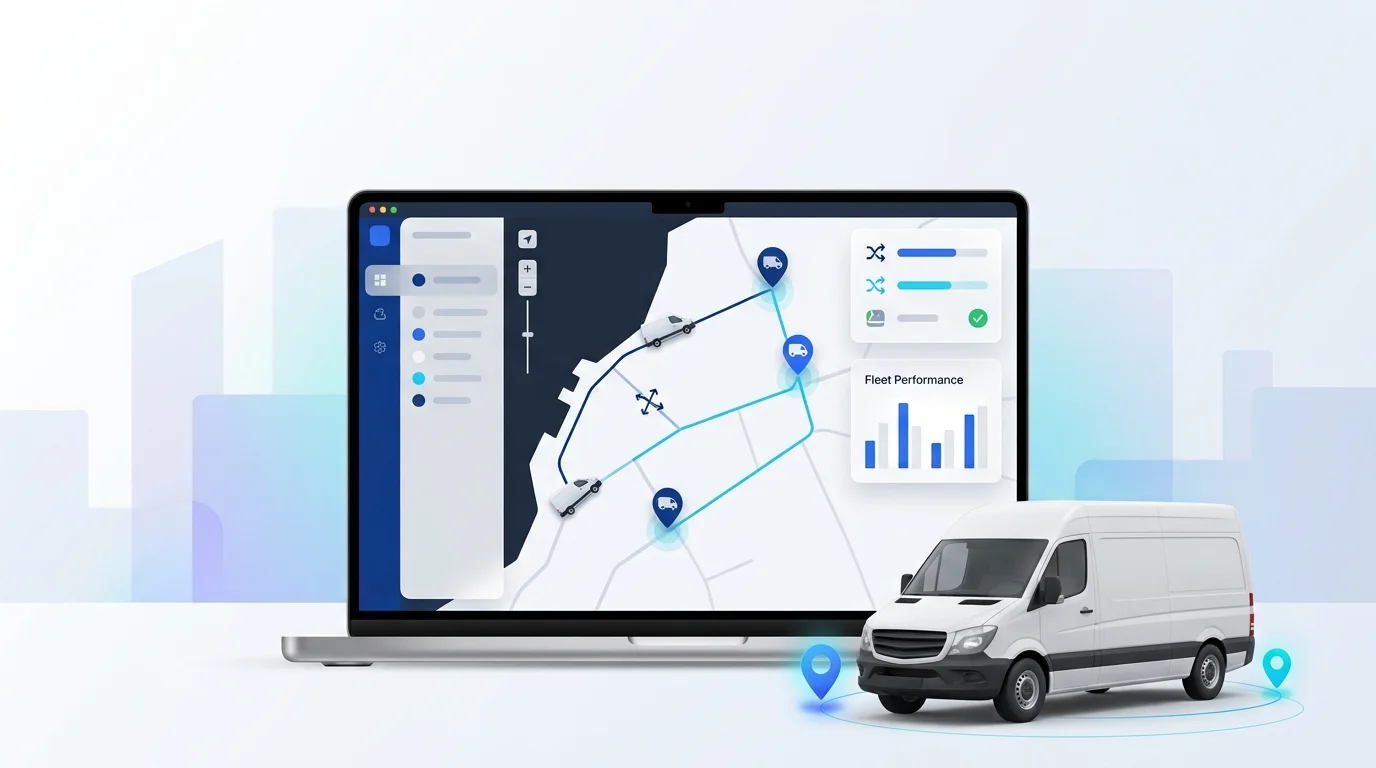
Samsara, Verizon Connect, On fleet, Route4Me, Dispatch Track, Fleet Complete, and AIQ Connect are among the top fleet tracking software programs for delivery and logistics providers in 2026. You can’t have delivery fleets with a dot on a map, you need route optimization, real-time tracking, proof of delivery and ETA notifications for customers working together. Most options are cloud-based and the only other alternative is to provide the tracking, geofencing, and reporting functionality on infrastructure owned, where no per-vehicle fees are charged like with AIQ Connect.
Key Takeaways
- Tracking and delivery is all the way round: routing, real-time visibility, proof of delivery, and notifying the customer.
- Optimization will reduce miles driven by 20-40% and fuel usage by 10-15%.
- Mobile platforms (Samsara, On fleet and Verizon Connect) are the leaders for managed convenience and last mile features.
- For logistics companies seeking control over their data and flat, per-vehicle-free pricing, self-hosted solutions such as AIQ Connect are ideal.
- Identify the right system for your operation: last-mile courier, regional distribution, or a mixed-logistics operation.
This guide gives you an idea of the best systems for delivery operations and how to decide. how GPS tracking works is the mechanics behind them and for general buyers’ perspective, check out best GPS fleet tracking systems.
What Delivery and Logistics Fleets Actually Need
Tracking systems are not the same for delivery or logistics operations. A plumbing company wants to know where its vans are: a delivery company wants to know that, and ensure sequence 200 makes stops efficiently, prove each drop actually occurred, and let customers know before noon.
The capabilities that matter most for delivery fleets:
- Route optimization – Optimization of routes, taking into account the time window, vehicle capacity, traffic, but not only static mapping.
- Real-time tracking Real-time tracking at least every 30 – 60 seconds, which is sufficient for live dispatch
- Proof of delivery (POD) Proof of delivery by photo, signature or GPS stamped confirmation to resolve conflicts.
- Customer notifications Up to date accurate customer notifications to reduce “where is my order” enquiries by providing dynamically updated ETAs.
- Geofencing Automating the arrival, logging, and billing of deliveries by geo fencing depots, delivery areas and customer locations.
- Reporting Reporting on cost per delivery, on time rate, driver performance.
- Scalability The ability to scale from a few routes to a network with multiple depots, without changing the platform.
One important difference in 2026: there will be point solutions (only routing, or only tracking), and there will be those that integrate the whole loop. Stitching 5 vendors into one has integration headaches; most delivery fleets have a preference for platforms that integrate planning, execution and verification.
Best Delivery and Logistics Tracking Systems Compared
Here’s how the leading systems compare for delivery and logistics use.
| System | Hosting | Best For | Delivery Strengths | Considerations |
| Samsara | Cloud | Large logistics fleets | Telematics + routing + ELD compliance | Premium pricing; add-ons increase cost |
| Verizon Connect | Cloud | All-round logistics ops | Tracking, dispatch, compliance in one | Quote-based; multi-year terms |
| Onfleet | Cloud | Last-mile courier/delivery | Driver app, POD, customer ETA texts | Higher entry price; last-mile focus |
| Route4Me | Cloud | Route-heavy delivery fleets | Deep multi-stop route optimization | No native ELD/telematics |
| DispatchTrack | Cloud | Big-and-bulky, scheduled delivery | Accurate ETAs, POD, customer comms | No public pricing; annual billing |
| Fleet Complete | Cloud | Distributed delivery fleets | Geofencing automation, telematics | Best when tracking is the main gap |
| AIQConnect | Self-hosted | Logistics firms wanting ownership | Tracking, geofencing, 60+ reports, white-label | You (or vendor) run the server |
The 7 Fleet Tracking System in Detail
1. AIQ Connect — Best for Logistics Firms Wanting Ownership
The self-hosted option. Tracking, geofencing and reporting layer, live location, cold-chain sensor monitoring, 60+ reports and on your own server with no per-vehicle fees provided by AIQ Connect. If tracking is critical to a logistics firm’s processes — particularly when it comes to sensitive route and customer information — or if the cost of tracking per vehicle increases with volume, then in-house tracking becomes the differentiator. It integrates seamlessly with routing solutions with API integration where more in-depth last-mile optimization is required.

2. Verizon Connect — Best All-Round Logistics Platform
The most comprehensive solution, with live tracking, dispatch, fuel reporting and compliance. Ideally suited for logistics operations with a single command center. Quoters pricing, longer contracts.

3. Onfleet — Best for Last-Mile Delivery
Onfleet’s offering that really shines is the customer-facing piece of software: a sleek driver application, live tracking links, automated “driver is 10 minutes away” text messages, and proof of delivery. Users experience high on time and fuel efficiency. Entry pricing is for mid-market and above.

4. Route4Me — Best for Route-Heavy Fleets
Route4Me is a route optimisation tool that can be learned in no time and is great when speed is the limiting factor for creating efficient multi-stop routes. It doesn’t have any native telematics or ELD functionality, which means this isn’t a tool for compliance-focused fleets.

5. DispatchTrack — Best for Scheduled & Big-and-Bulky Delivery
It’s really been best-in-class in the delivery space, particularly in the area of accurate ETAs and proactive communication on appointment-based, big-and-bulky deliveries (furniture, appliances), which makes delivery a brand touchpoint. Routing and customer experience are all in one system. Pricing is quote-based.

6. Fleet Complete — Best for Distributed Fleets
Fleet Complete integrates telematics, mobile dispatch and geofencing automation, automatically triggering status updates and exception alerts when drivers move. The biggest gap is lack of real-time visibility a fit.

7. Samsara — Best for Large Logistics Fleets
With GPS data every second, Samsara’s solution is a unified platform that includes real-time tracking, AI dashcams, route features and ELD compliance. Giant, safe logistics business, at a high price – the higher the more features you add.

The ROI of Tracking for Delivery Fleets
For delivery operations, tracking pays back fast because the inefficiencies are expensive and measurable:
- Fewer miles. For every 20-40 miles driven fewer, total miles driven on the road goes down, reducing fuel, maintenance and overtime.
- Lower fuel cost. Optimized routing and driver coaching can provide 10–15% fuel savings and this benefit applies to fleets (CSCMP State of Logistics, 2025).
- Fewer failed deliveries. If the first delivery is unsuccessful, the unit cost per delivery is increased by approximately 100 per cent, with the opposite being the case for better routing and live tracking.
- Fewer support calls. Inbound enquiries about the status of an order are reduced by automated ETA notifications.
- Faster dispute resolution. Digital proof of delivery will eliminate billing and delivery disputes with a photo-documented or signed receipt.
These compound industry analysis estimates recoverable value in the case of 50 vehicles in a last mile fleet well into the six figures annually at scale. See one-time license vs subscription GPS tracking for a general overview of the cost of ownership versus subscription.
Cloud vs Self-Hosted for Logistics
For a logistics company, the deployment decision holds even greater significance because of all the data: all routes, all customer addresses, all delivery times, all movements of drivers.
All that is delivered via the Cloud and easily deployed – that’s a good choice for many operations, particularly those that rely on last mile capabilities, such as automated customer notifications. The compromises are the ongoing cost of per-vehicle transactions and customer/route information on a vendor’s network.
A self-hosted solution, such as AIQ Connect, stores that data on infrastructure that you control (GDPR compliant, air-gapped if needed), eliminates the per-vehicle fee and can be white-labeled and used for 3PLs and logistics companies that want to provide tracking services to their clients. The fair exchange: A server has to be managed, and if you’re looking to get the server to offer you the last-mile customer-experience features, you might need to choose a purpose-built cloud tool. Many logistics operations operate both: a self-hosted core for tracking and data, and have specialist routing added on top as API.
It is worth considering if data ownership and predictable cost are important metrics to your logistics business. Book a free demo or explore the feature set.
To go deeper, see the benefits of self-hosted GPS tracking software or what is fleet tracking software.
FAQs About Fleet Tracking System
What is the best fleet tracking system for delivery companies?
On fleet tops the list for last-mile courier delivery, with driver app, POD, and customer ETAs, Samsara rules the roost for large, compliance-heavy logistics companies, and Route4Me is the depth charging expert for route optimization. AIQ Connect is an alternative for companies that wish to own the data and not pay per-vehicle fees.
What features do delivery fleets need in a tracking system?
Route optimization with time windows, real-time tracking (30–60 second updates), proof of delivery and automated customer ETA notifications, geofencing around depots and delivery zones, and reporting on cost per delivery and on-time rate.
How much can route optimization save a delivery fleet?
Route optimization usually reduces overall driving mileage by 20-40% and fuel usage by 10-15%. Documented savings for 50 vehicles are in the thousands of dollars per year, not counting lower numbers of failed deliveries or overtime.
What is proof of delivery (POD)?
When you are delivering a proof of delivery is a photo, signature, or GPS-stamped confirmation at the time of delivery. A key component for delivery and logistics operations, it confirms a drop and is employed to settle billing and customer disputes.
Do logistics companies need cloud or self-hosted tracking?
Cloud suits offerings for businesses that require end-to-end services without server administration. Self-hosted is for logistics companies requiring data ownership, a predictable cost at scale without any involvement of the vehicle, or white-label functionality for their own customers. Many host their core and special routing applications.
Can one platform handle both tracking and route optimization?
Some do. Enterprise telematics platforms, such as Samsara, integrate routing and tracking, while specific tools like Route4Me are routing optimization in-depth. Self-hosted tracking platforms can also be integrated with routing software through API, enabling logistics companies to own the data and also have best in class routing.
How often should a delivery tracking system update location?
Every 30-60 seconds live dispatch is minimum, 5-10 second update gives detailed information on the route which is useful for customer communication and exception handling. Slower intervals (60-120 seconds) decrease the cost but increase the lack in granularity.


