
Best GPS Fleet Tracking Systems for Fleet Management in 2026
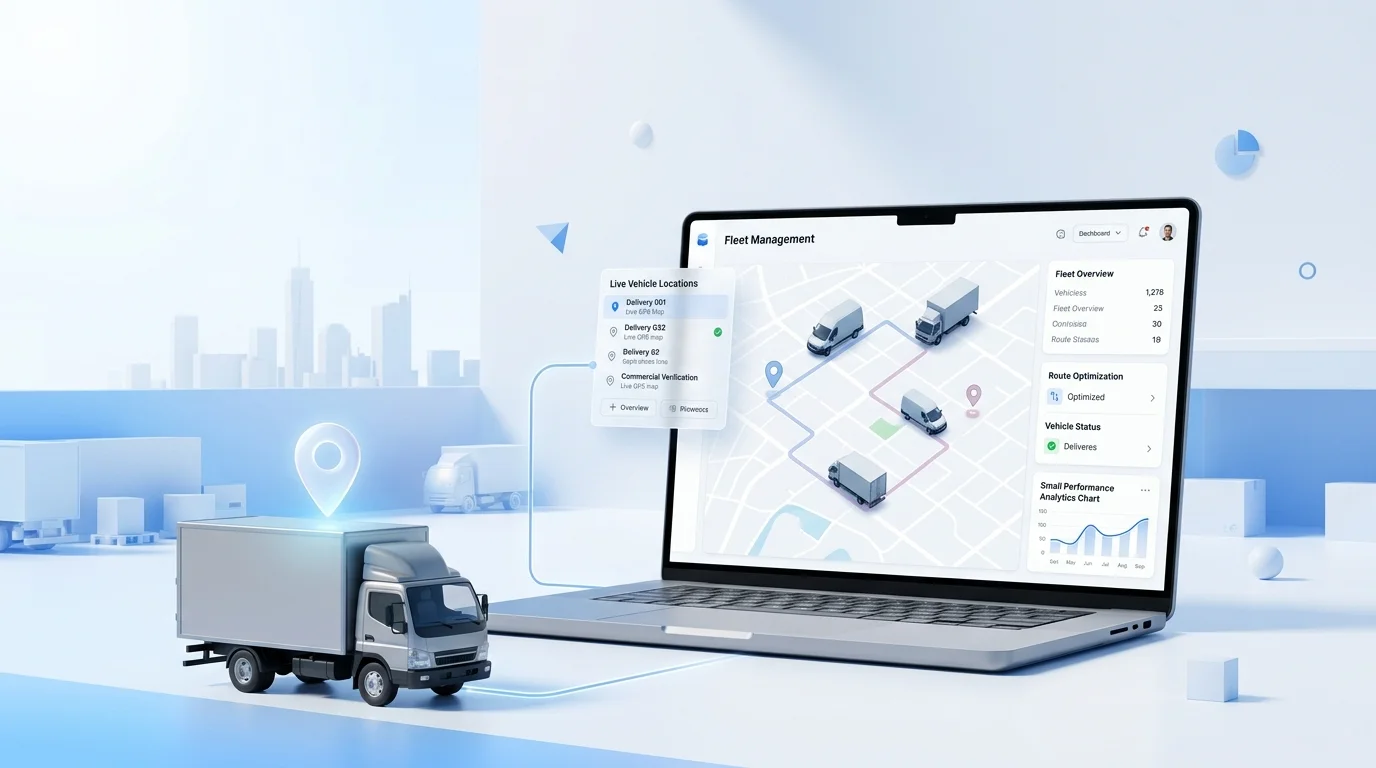
One of the most impactful choices a fleet operator can make is to select a GPS fleet tracking system. The right system not only saves you money on fuel usage, but also reduces accidents, maximizes vehicle utilization and provides you with a single source of truth on all vehicles. The wrong one gets you into data that you don’t really own, limited features and higher fees.
This buyer’s guide explains the different types of GPS fleet tracking systems, cloud-based, self-hosted and open-source, and then matches the system to your fleet, not the other way around. If you want to hear about the pros of self-hosted GPS tracking software for the bigger picture, you can read our pillar guide on the benefits of self-hosted GPS tracking software.
What a GPS Fleet Tracking System Actually Does
It’s easier to compare options when you know what you are looking for. A modern GPS fleet tracking system can do so much more than simply display dots on a map.
Core Capabilities
- Live vehicle location and map view.
- Trip History, Route Replay, and Geofencing.
- Active driver monitoring (speeding, harsh braking, idling).
- Fuel monitoring and fuel consumption analytics.
- Scheduling and alerting maintenance tasks.
- Reports and dashboards of utilization, compliance, and cost.
Why Fleets Invest in Tracking
The return is measurable and well-documented across industry research:
- Fuel savings: According to fleets that use GPS tracking, they can save 10-15% on fuel within the first year, and the data from Verizon Connect shows an average 12% reduction (Verizon Connect, 2026; Geotab Fleet Management Industry Report, 2024).
- Compliance: Some 69% of commercial fleet operators in North America and Europe already employ GPS tracking on at least some of their fleets (Berg Insight, Fleet Management Market Report, 2024).
- Safety: Telematics-based driver programs reduce harsh braking incidents by 50-70% and result in 15-25% fewer crashes ( Virginia Tech Transportation Institute, 2024).
- Operating Cost : Fuel cost savings are easily compounded, as the American Transportation Research Institute (ATRI) reports that fuel represents approximately 24% of a fleet’s operating costs.
The Three Types of GPS Fleet Tracking Systems
It’s not so much about the brand, it’s about the deployment model. Each type is good for a different type of operation.
1. Cloud (SaaS) GPS Fleet Tracking
This service is provided and hosted by the vendor, which is then subscribed to, usually on a monthly basis per vehicle. They are quick to deploy and don’t need technical set up, making them attractive to smaller fleets. The trade-off is for ongoing cost and limited control: your data resides on the vendor’s servers, costs continue and increase with each vehicle, and customization is limited by the vendor’s roadmap.
2. Self-Hosted GPS Fleet Tracking
You own the data and deployment and are typically able to rebrand and customize the platform as you wish, whether it be for a one-time license or hostings. This model has several merits in terms of data ownership, long term cost at scale and control. The price you pay is that you (or your vendor) do the set up and maintenance. A side by side comparison of the two above in the context of self-hosted vs cloud GPS tracking.
3. Open-Source GPS Fleet Tracking
Open-source platforms like Traccar and OpenGTS are free to download and self-host and full access to code is provided. They’re effective and affordable, but require technical expertise to set up, protect and maintain; and they aren’t supported; they’re community supported.
Comparison: Cloud vs Self-Hosted vs Open-Source
| Factor | Cloud (SaaS) | Self-Hosted (Commercial) | Open-Source |
| Setup speed | Fastest | Moderate (often vendor-installed) | Slow, DIY |
| Pricing | Recurring per vehicle | One-time license + hosting | Free software, you pay hosting |
| Data ownership | Vendor-controlled | Fully yours | Fully yours |
| Customization | Limited | Extensive | Unlimited (if you can code) |
| Branding / white-label | Rare | Yes | Possible, DIY |
| Support | Included | Included | Community only |
| Best for | Small fleets, fast start | Scaling fleets, resellers | Technical teams, tight budgets |
Popular GPS Fleet Tracking Systems Compared
To help get the deployment models into perspective, here are some of the more well known systems side by side. They are each briefly stated in a single statement for easy scanning.
| System | Best For | Pricing Model | Ownership |
| Fleet Complete | Enterprise fleets needing broad telematics coverage | Subscription | Vendor |
| Samsara | Telematics and safety with rich hardware integration | Subscription | Vendor |
| Geotab | Data and analytics-heavy fleet operations | Subscription | Vendor |
| Traccar | Technical teams comfortable with DIY open-source | Open source | User |
| AIQConnect | White-label fleets wanting full ownership, no per-vehicle fees | One-time license | User |
There is a clear trend; most of the established ones are subscription and vendor owned platforms. The open-source and commercial self-hosted systems are the ones that give you ownership of the data and platform, and they are the ones that have AIQConnect as the combination of ownership and commercial-grade support and branding.
GPS Fleet Tracking Feature Checklist
No matter which system you choose to shortlist, test it with this checklist. The first is a must-have for virtually any fleet; the second really brings the fleet management platform to the party.
Must-Have Features
- Real-time GPS location and live map
- Trip history and route replay
- Geofencing with entry/exit alerts
- Driver behavior monitoring (speeding, harsh braking, idling)
- Fuel monitoring and consumption reports
- Maintenance scheduling and service reminders
- Customizable reports and dashboards
- Mobile app access for managers and drivers
Advanced / Differentiating Features
- Data ownership and on-premise or private-cloud hosting
- White-label branding (logo, domain, languages)
- Temperature and sensor monitoring for cold chain
- ERP, dispatch, and billing integrations via API
- Multi-client portals for resellers and 3PLs
- Compliance and audit reporting for regulated sectors
In addition to that, if data ownership, white labelling and API access are in the “critical” column and not in the “nice-to-have” column, then the list is reduced to self-hosted systems.
How to Choose the Best GPS Fleet Tracking System
The best system is the one that is appropriate for your fleet size, technical ability and future growth plans. Break down the factors, one by one.
Match the System to Your Fleet Size
Cloud is commonly initial choice for small fleets lacking IT resources. Fleets of this size typically benefit from self-hosted, as per-vehicle fees do not increase with the fleet size beyond a certain number of vehicles.
Weigh Total Cost of Ownership, Not Sticker Price
The monthly cost of a cheap software can turn out to be your most expensive software expense at scale. Before you sign up, consider the multi-year cost of a subscription versus a one-time license plus hosting; it might work out cheaper to own. For a detailed comparison of one-time license vs subscription GPS tracking, check out the difference between GPS tracking license and GPS tracking subscription.
Check the Features That Matter to You
Avoid paying for features you are never going to use, but also ensure it meets your non-negotiables, fuel monitoring, driver behaviour, maintenance, compliance reporting or cold chain temperature tracking.
Prioritize Data Ownership and Compliance
For GDPR or data-residency requirements or those who simply don’t want to entrust a third party with their location data, deployment model outweighs features. Open source and self-hosted means that the data is yours.
Plan for Branding and Resale
If you plan to resell tracking or operate it under your own name, you will need a white label-ready system, which pretty much eliminates all cloud systems. This is the starting point for anyone aspiring to start a GPS tracking business.
Why AIQConnect Is the Smart Choice for Serious Fleets
Most systems require either a compromise of speed at the cloud level, but no ownership, or a compromise at the open-source level, but with no support. Eliminating this trade-off, AIQConnect is a self-hosted, white-labelled GPS fleet tracking solution that brings commercial software’s style and on-premise’s ownership.

Here’s what sets it apart:
- You own everything. It is deployed on your own server, and your fleet and customer data never reside on a shared, third party, cloud or, if required, is GDPR compliant and air-gapped.
- One license, unlimited vehicles. No per-vehicle fees that cost you your profit as you scale up – track 50 units or 500,000 for the same software price.
- Fully white-label. Your Logo, your Domain, your Branding, in 15+ Languages all ready to sell as your own product.
- 60+ built-in reports. 60+ built-in reports. Out-of-the-box fuel, driver behavior, utilization, maintenance, compliance and custom reports around your KPIs.
- Done-for-you setup. The system is installed and configured within a team of dedicated specialists, with extensive documentation and training, with most clients live within weeks, not months.
- Trusted at scale. Already powering 700+ businesses with purpose-built solutions for transport, 3PL, cold chain, container tracking, field force and fleet billing.
Schedule a no-cost demo or experience all the features.
For the best of both worlds – commercial-grade tracking that you own, AIQConnect is the system to beat. Book a free demo or explore the full feature set to see it in action.
Frequently Asked Questions About GPS Fleet Tracking Systems
What is the best GPS fleet tracking system?
No single best system exists – it will depend on fleet size, budget, and control. Cloud suits small fleets looking for speed; self-hosted suits scaling fleets and resellers looking to be cost owners and reduce cost at scale; open-source suits technical teams on budgets.
Is cloud or self-hosted better for fleet tracking?
Cloud has an easier start and lower initial costs; self-hosted has lower running costs and complete data ownership and customization. Many fleets start on cloud, and eventually transition to self-hosted See self-hosted vs cloud GPS tracking.
How much does a GPS fleet tracking system cost?
The average price for cloud systems is $20-$50 per vehicle per month. The cost of ownership for a self-hosted system is typically lower than a hosted system when you start adding up the cost of the hardware, software and the license fee, especially after a few hundred vehicles.
What features should a GPS fleet tracking system have?
At the very least: real-time tracking, driver behaviour tracking, fuel analytics, driver history, geofencing, maintenance scheduling and solid reporting. Don’t go for the longest list of features; go for the features that work for your operation.
Can I run my own GPS fleet tracking system?
Yes. If you have a self-hosted or open source platform, you can host the tracking on your own server. It is installed for you by commercial self hosted systems such as AIQConnect; for these you will own it without the DIY burden,see how to install GPS tracking software on your own server.


One Comment